
Which Background Removal APIs Work Best for Product Images?
A practical 2026 comparison of the top rated background removal APIs for e-commerce catalogs: edge quality, latency, pricing model and integration effort, plus how to test them on your own product photos.
Programmatic image processing is no longer a nice-to-have — it is a foundational layer in modern application architecture. E-commerce marketplaces ingest thousands of seller-uploaded product photos every hour and must normalise them to a uniform transparent-background standard. Design tools like Canva and Figma plugins invoke background removal on every user canvas. Social platforms strip backgrounds from profile photos during onboarding. Identity verification systems extract document images from messy real-world backgrounds.
Every one of these use cases depends on a reliable, low-latency automated background removal endpoint. The choice of which provider to integrate directly impacts four critical dimensions of your application: latency (how fast the user sees a result), edge-detection accuracy (how clean the cutout looks), scalability (whether the service holds up during traffic spikes), and cost per request (how the line item scales with your volume).
This report evaluates the top rated background removal APIs against these pillars using objective benchmarks and real integration patterns. Whether you are building a marketplace, a SaaS design tool, or a high-volume image processing pipeline, these data points will help you select the infrastructure that matches your throughput and quality requirements.
Quick Answer: The Best Background Removal APIs for Product Images
There is no single winner, but the APIs that consistently work well for product images are Photoroom API, remove.bg, Clipdrop, Cloudinary AI Background Removal, the Adobe Photoshop API and RMBG.PRO. Choose by workflow, not by marketing claims:
- Already storing images in Cloudinary? Use its built-in add-on.
- Need shadows and staged scenes on top of cutouts? Look at Photoroom.
- Need a simple, fast cutout endpoint with binary output? remove.bg, Clipdrop or RMBG.PRO.
- Already inside the Adobe ecosystem? The Photoshop API fits that pipeline.
Background Removal API Comparison for Product Photos
The table summarises what each provider is best known for. We deliberately avoid quoting prices or benchmark numbers here because plans change often: check each vendor's pricing page and test on your own catalog before you decide.
| API | Best for | Product-image strengths | Watch out for |
|---|---|---|---|
| RMBG.PRO | Simple cutout API plus a web editor for the same account | Transparent PNG output, white or colored backgrounds, logo overlay, batch workflows | Newer brand than some incumbents: test on your hardest SKUs |
| remove.bg | General-purpose cutouts, wide plugin ecosystem | Mature API, well-documented, many integrations | Credit-based pricing can get costly at high volume |
| Photoroom API | Marketplace and retail product imagery | Cutouts combined with shadows, backgrounds and scene generation | Feature scope is broader than pure removal, so plans vary |
| Clipdrop (Stability AI) | Developers who also want other image-AI endpoints | Remove-background plus relighting, upscaling and cleanup endpoints | Check current API terms and limits before building on it |
| Cloudinary AI Background Removal | Teams already hosting and transforming images on Cloudinary | Applied via URL transformation, no extra pipeline to build | Add-on usage is metered inside your Cloudinary plan |
| Adobe Photoshop API | Enterprises standardised on Adobe workflows | Remove-background alongside other Photoshop-grade operations | Enterprise onboarding and higher integration effort |
| Self-hosted open models (U2-Net, BiRefNet, RMBG variants) | Very high, predictable volume or strict data residency | No per-image fee, full control and fine-tuning | You run GPUs and scaling; verify each model's commercial license |
What Matters Most for Product Images (Not Portraits)
Most background removal benchmarks are built around people and hair. Product catalogs fail in different places, so score candidates on these checks:
- Transparent and reflective items: glassware, bottles, jewelry and chrome often lose highlights or keep a halo.
- Product shadows: marketplaces often want a soft natural shadow on white, not a floating object. Check whether the API can generate or preserve one.
- Fine detail: mesh, lace, straps, chains and fringe reveal weak edge detection quickly.
- Consistency across a batch: the same product shot at ten angles should produce ten similar cutouts.
- Output compliance: pure white (#FFFFFF) backgrounds, square canvases and minimum resolutions for Amazon, Shopify or Google Merchant Center.
- Cost per accepted image: divide spend by images that need no manual retouching, not by images processed.
How to Test Background Removal APIs on Your Own Catalog
- Pick 50 to 100 real SKUs, including your hardest 10 to 20 (glass, jewelry, textiles, dark items on dark backgrounds).
- Send the same files to two or three providers using the same output format.
- Review the results blind, scoring each cutout as accept, minor fix or reject.
- Measure P50 and P95 latency and the error and rate-limit behaviour under a concurrent batch.
- Compare cost per accepted image at your expected monthly volume.
For a deeper technical walkthrough, see our background removal API developer integration guide. If you also need to prepare marketplace-ready images, read how to create white background product photos and our review of the best AI background removers for e-commerce.
What Makes an Enterprise-Grade Background Removal API?
Before comparing providers, it is worth defining the technical capabilities that separate a hobbyist-grade API from one built for production workloads. A developer image processing tool meant for enterprise integration must score well on each of the following criteria:
Response Payload Formatting
The fastest APIs return the processed image as raw binary in the response body with appropriate Content-Type headers (image/png). Some providers return Base64-encoded strings inside a JSON wrapper, which adds 33 % overhead in transfer size and requires an extra decoding step on the client. For high-throughput pipelines, binary responses reduce bandwidth and eliminate unnecessary CPU cycles.
Rate-Limiting and Concurrent Connection Management
Enterprise APIs expose rate-limit headers (X-RateLimit-Remaining, X-RateLimit-Reset) so clients can back off gracefully. More importantly, they support concurrent connections — the ability to send multiple requests simultaneously without queueing. Providers that cap concurrency at 1-2 requests force clients to serialise their workflows, which destroys throughput for batch processing.
SDK and Integration Options
First-class SDKs for Node.js, Python, Go, and REST cut integration time from days to hours. The best providers ship typed SDKs with automatic retry logic, configurable timeouts, and built-in concurrency control so that the developer does not need to reinvent HTTP client infrastructure.
The Benchmarking Metrics: How to Evaluate Providers
Edge Processing Quality
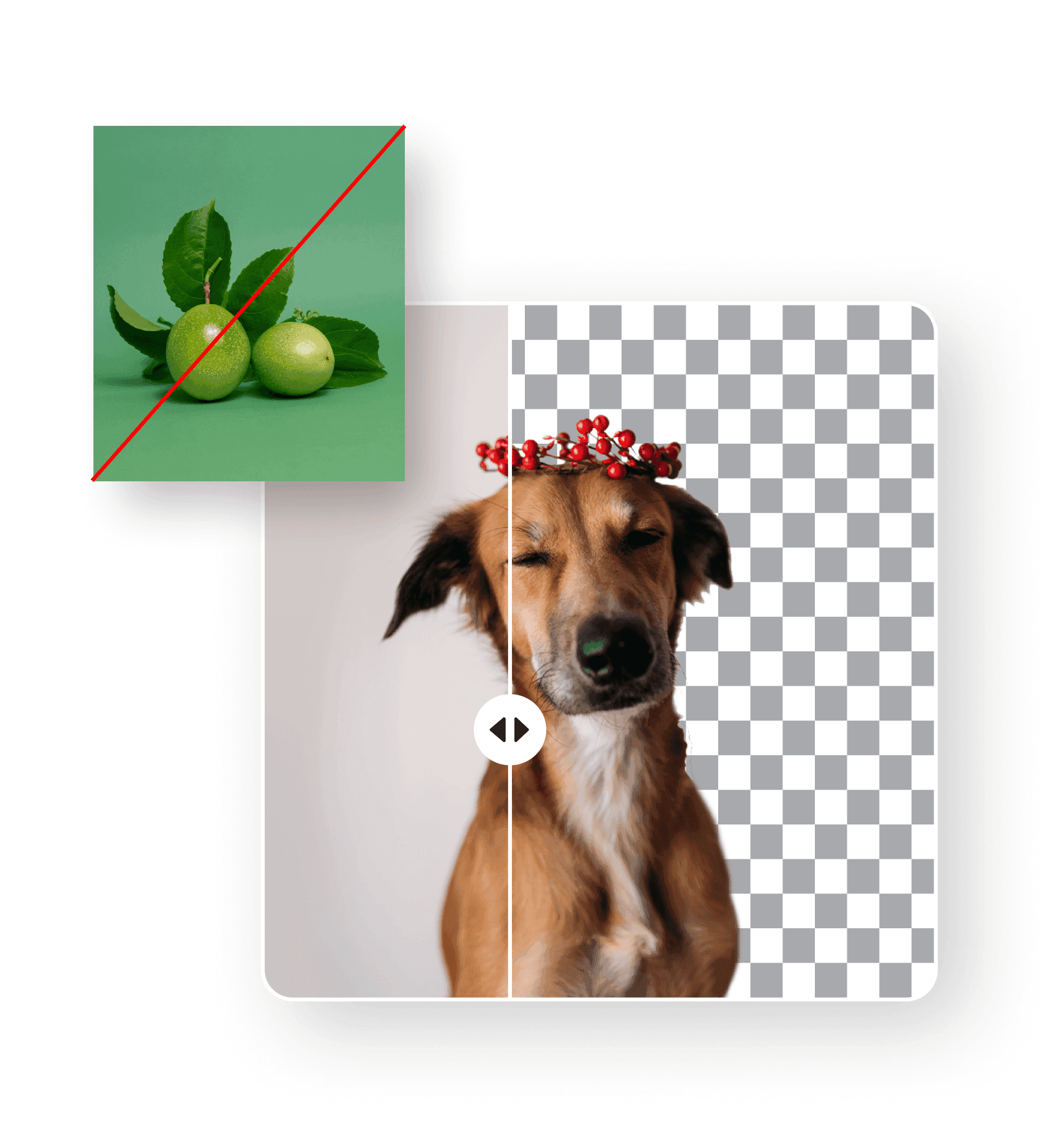
The most visible differentiator between APIs is how they handle complex edges. Test each provider with three challenge images: a portrait with fine flyaway hair, a product shot of a transparent wine glass, and an apparel item with delicate lace or fringe. The programmatic background extraction engine that preserves semi-transparent pixels around hair strands and maintains the glass's refractive highlights without introducing a visible halo is the one that will produce production-ready cutouts without human review.
Response Latency
Latency is measured from the moment your POST request hits the server to the moment the response body is fully received. For a standard 1080p JPEG, top-tier providers return results in 300-800 ms at P50, with P99 under 2 seconds. APIs that exceed 1.5 seconds at P50 introduce perceptible delay in user-facing features like real-time preview or one-click upload workflows. When evaluating image cutout API pricing, factor in that cheaper per-request costs often correlate with shared, oversubscribed GPU infrastructure that drives P99 latency above acceptable thresholds.
Uptime and Scalability
A production-grade API guarantees 99.9 % uptime or better and auto-scales to handle traffic spikes without degrading performance. During Black Friday or seasonal campaign launches, an e-commerce platform can see 10x normal request volume. APIs that rely on fixed GPU pools will return 429 (Too Many Requests) or exhibit latency amplification under load. The top rated background removal APIs publish a status page, provide a service-level agreement, and design their infrastructure with horizontal auto-scaling so that every request is serviced within the latency budget.
Integration Example: The Developer's Perspective
A well-designed automated background removal endpoint should let you go from zero to a clean transparent PNG in fewer than twenty lines of code. Here is a standard Node.js fetch implementation that sends an image URL to the API and streams the result to disk:
import fs from 'node:fs';
import { pipeline } from 'node:stream/promises';

const API_ENDPOINT = 'https://api.example.com/v1/remove-background';
const IMAGE_URL = 'https://example.com/product-photo.jpg';

const response = await fetch(API_ENDPOINT, {
  method: 'POST',
  headers: {
    'Content-Type': 'application/json',
    'X-Api-Key': process.env.API_KEY,
  },
  body: JSON.stringify({
    image_url: IMAGE_URL,
    format: 'png',        // png | webp | jpg
    scale: 'original',    // original | fit | fill
    shadow: false,        // enable drop shadow
  }),
});

if (!response.ok) {
  const error = await response.json();
  throw new Error(`API error ${response.status}: ${error.message}`);
}

// Stream binary response directly to file
const outputPath = './output/transparent-product.png';
await pipeline(response.body, fs.createWriteStream(outputPath));

console.log(`Saved transparent PNG to ${outputPath}`);
This pattern works for single-image processing. For batch workloads, wrap the call in a Promise.all pool that respects the API's concurrency limit — typically 5-10 parallel requests for production keys. The response body is raw binary data, so no Base64 decoding is needed; you can pipe it directly to a file, upload it to S3, or forward it to a CDN.
Frequently Asked Questions
Which background removal APIs work best for product images?▾
For product images, the strongest options are the ones built for e-commerce: Photoroom API, remove.bg, Clipdrop, Cloudinary AI Background Removal and the Adobe Photoshop API. The best choice depends on your pipeline: pick Cloudinary if you already host images there, Photoroom if you also want shadows and generated scenes, and remove.bg or RMBG.PRO for a simple cutout endpoint. Always test with your own catalog images before committing.
What is the best background removal API for e-commerce catalogs?▾
The best API for an e-commerce catalog is the one that stays clean on your hardest products (glass, jewelry, fur, mesh fabric), accepts batch or concurrent requests, returns a binary PNG or WebP, and has a pricing model that fits your monthly volume. Run 50 to 100 real SKUs through two or three candidates and compare edge quality and cost per accepted image.
Which background removal API is the most accurate?▾
No provider is the most accurate on every image. Accuracy depends on the subject: portraits stress hair edges, while product photos stress transparent and reflective objects. Published benchmarks are rarely independent, so the reliable method is a blind test on a sample of your own images, scored by how many cutouts need manual fixes.
Are there free background removal APIs for product photos?▾
Several providers offer a free tier or trial credits, and open-source models such as U2-Net, BiRefNet or RMBG variants can be self-hosted at no per-image fee. Check each model's license before commercial use, and remember that self-hosting adds GPU and maintenance costs. RMBG.PRO also has a free tier you can try without a credit card.
How do I choose between a hosted API and a self-hosted model?▾
Use a hosted API when you want fast integration, auto-scaling and no GPU operations. Self-host when volume is very high and predictable, when images cannot leave your infrastructure, or when you need to fine-tune on your own product category. Many teams start hosted and move to self-hosted only past a clear cost threshold.
What image format should a background removal API return?▾
Look for a binary PNG or WebP response with transparency rather than a Base64 string inside JSON. Binary avoids roughly 33% size overhead and an extra decode step. For marketplaces that require white backgrounds, choose an API that can also composite onto a solid color or return JPG.
Build on a High-Performance Background Removal Engine
Our platform delivers a developer image processing tool built for speed, pinpoint accuracy, and production-scale throughput. The architecture provides seamless REST integration, high concurrency, reliable 99.9 % uptime, and competitive image cutout API pricing that scales with your volume. Whether you are processing 1,000 images per day or 1 million, the engine auto-scales to meet your workload without degrading latency.
Start with the free tier — no credit card, no commitment.
REST API • 99.9 % uptime • Auto-scaling • Sub-second latency • Binary response